
Why FUE
is the gold standard
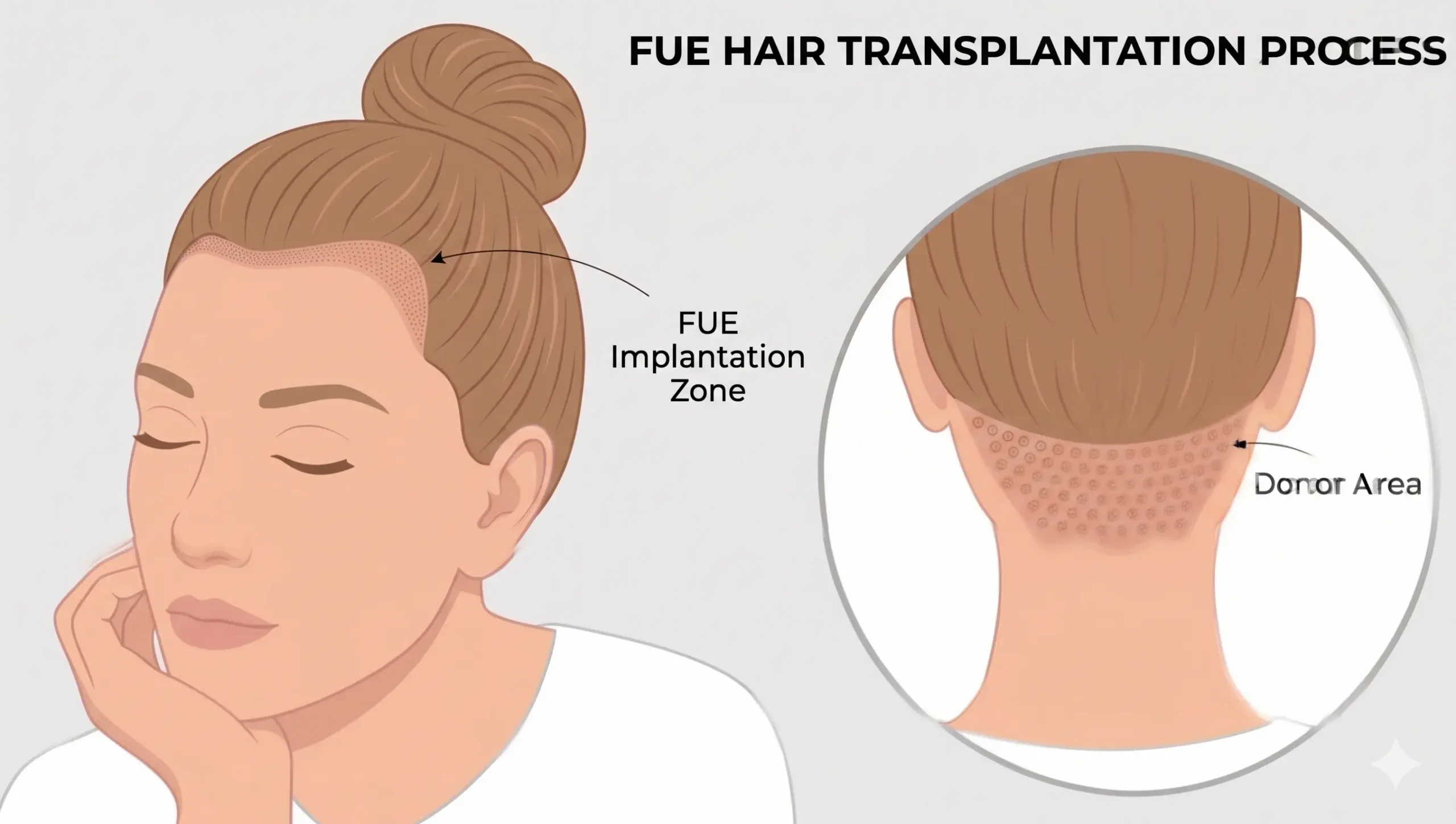
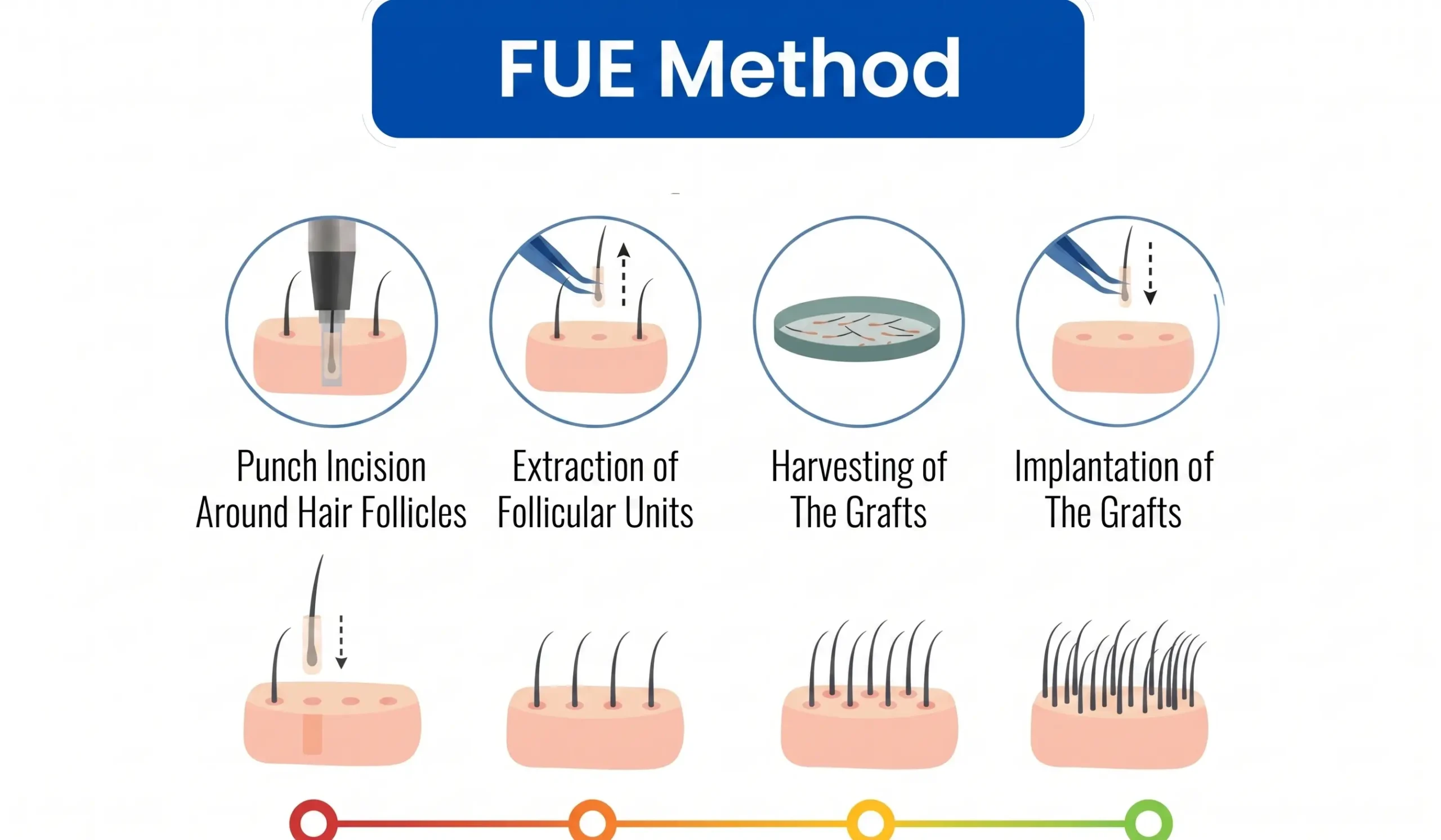
FUE (Follicular Unit Extraction) replaced the older FUT strip technique as the preferred method worldwide. Instead of removing a strip of scalp — which leaves a permanent linear scar — FUE extracts each follicular unit individually using a specialized micropunch of 0.8 to 1.0 mm in diameter. The result is a series of tiny, nearly invisible dots in the donor area at the back of the head that heal naturally within 2 weeks. No stitches, no linear scar, and a much faster recovery.
01
No linear scar
Only tiny white dots remain in the donor area — invisible within 2 weeks. If you ever want to shave the back of your head for an undercut hairstyle, there won't be any visible trace of the procedure.
02
95–100% survival rate
When each graft is handled correctly and stored in a specialized preservation solution, the transplanted follicle survival rate reaches 95–100% (following the aftercare instructions strictly is crucial).
03
Outpatient procedure
No hospitalization required. Local anesthesia with mild sedation keeps you comfortable and awake throughout the 4–8 hour session. LED TV screen in the OR for you to watch your favorite shows.
04
Permanent results
Transplanted follicles are taken from hormone-resistant areas at the back and sides of the head. They keep their genetic programming and continue growing for life.
Redesigning the
feminine hairline
The hairline is the second most important gender marker in the upper third of the face, after the shape of the forehead bones. A male hairline typically forms an M-shape, with recession and angular corners at the temples, which cause a higher forehead. A female hairline follows a softer, rounded or inverted-U contour and sits lower on the forehead on the sides.
FUE hair transplant precisely targets the receded temple corners, filling and rounding them with hormone-resistant grafts to create a permanently feminine hairline shape. The procedure can be performed in the same trip as forehead feminization surgery, 2 weeks after, which extends 5 days the total recommended stay in Buenos Aires.
When to combine
with FFS
In the same trip as FFS
FUE hair transplants performed in the same medical trip to Buenos Aires as forehead feminization, 10 to 14 days apart — patient gets back home with complete upper third feminization.
Before FFS
If preferred, FUE can precede FFS — but a waiting period of about 6 months is recommended before further operations, to allow the grafts to settle and consolidate fully. Not recommended if a scalp advancement will be part of the FFS, because the scar from forehead contouring will be left in front of the transplants.
After FFS
FUE hair transplants can also be performed after FFS to refine the hairline, cover incision scars, or add density. A minimum wait of 6 months after FFS is required so that swelling has fully resolved and soft tissues have consolidated. Recommended if a scalp advancement will be part of the FFS, because transplants can be grafted in the scar resulting from forehead contouring and help conceal it.
How the FUE procedure works
Consultation & hairline design
The surgeon evaluates your hair loss pattern, donor density, and designs the new feminine hairline — marking the target contour before any extraction begins.
Donor area preparation
The donor zone (back and sides of the head) is shaved and numbed with local anesthesia. A mild oral sedative keeps you relaxed — you remain awake throughout.
Individual graft extraction
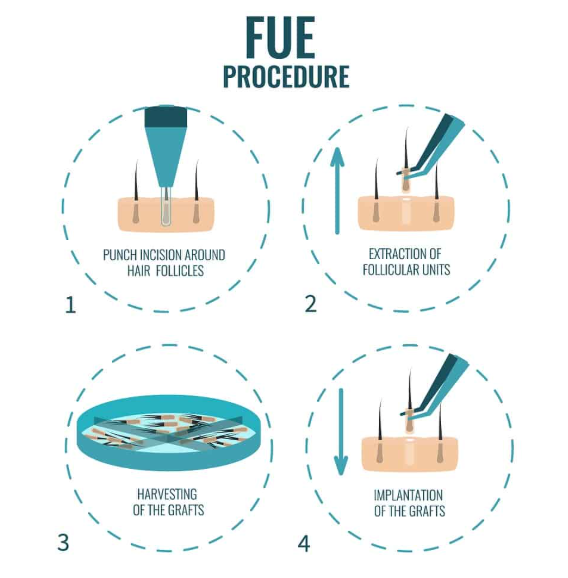
Using a 0.8–1.0 mm micropunch, each follicular unit (containing 1–4 hairs) is individually extracted. Grafts are stored in a preservation solution to maintain vitality.
Recipient site creation
Tiny incisions are made in the recipient area following the natural hair growth angle. Single-hair grafts are placed at the hairline; denser multi-hair grafts further back.
Graft placement
Each graft is precisely implanted following the natural direction, angle, and density of your hair — achieving a completely natural hairline that blends seamlessly.
Everything you
need to know
FUE is a long commitment — the final result unfolds over 12 months. Here are the most important questions answered honestly.
What to expect,
month by month
We take care of
every detail
Our patients travel from across the Americas, Europe, Oceania and beyond. We coordinate every stage — from consultation to post-operative follow-up — so you can focus entirely on your recovery.
Get in TouchBilingual Assistants & Transportation
Transfers to and from Airport, medical appointments and surgery — with bilingual support throughout your stay.
24/7 Staff Access
A complimentary local SIM card with Internet data to reach our team at any hour during your stay in Buenos Aires.
In-Hospital Translators
Translators available for all medical appointments to ensure clear communication with the surgical team.
Ready to feminize
your hairline?
Send us close-up photos of your hairline from the front, sides, and above. We'll assess your donor density and design a personalized feminizing FUE hair transplant plan.