

Blepharoplasty
Eyelid Surgery
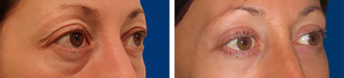
Eyelids are a key feature of the face; they have a great impact on the overall face's expression. When they are swollen with fat deposits or sagging, your eyes will make you look older and more tired than you really are and feel. Blepharoplasty offers a solution so that your eyes will recover their lost liveliness.
Recover the liveliness
of your eyes
Eyelids are a key feature of the face; they have a great impact on the overall face's expression. When they are swollen with fat deposits or sagging, your eyes will make you look older and more tired than you really are and feel.
Blepharoplasty offers a solution to these problems so that your eyes will recover their lost liveliness. It can be performed on the upper eyelids, lower eyelids, or both — and can be combined with canthopexy or other facial procedures in the same surgical session.
Everything you need
to know
Our medical coordinator answers all pre-consultation questions within 24 hours.
Ask a Question- It refreshes and rejuvenates the look by correcting those traits that contribute to make you look older and tired, such as the "bags" on the lower eyelids and sagging upper eyelids.
- It removes sagging skin from the upper eyelids caused by decrease of bone support when brow ridge reduction is done for forehead feminization
- It removes eyelid puffiness caused by excess fat inside the eyelids.
- It improves the sight by trimming down the upper eyelids when they droop too much and interfere with the vision.
- It does not remove crow's feet.
- It does not remove dark circles under the eyes.
Anesthesia
Local anesthesia and sedation.
Duration
From one to three hours, according to your case.
How is it performed?
The surgeon makes the incisions along the natural folds of the eyelids, so the resulting scars will be disguised. On the upper eyelids the incision is done along its natural folds, and on the lower eyelids it is done just below the eyelashes. In some cases, the incisions extend some millimeters beyond the corners of the eyes.
Working through these incisions, the surgeon removes the excess fat that accumulates beneath the skin and trims the excess skin that gives the eyes that sagging and tired look. Then the incisions are closed with stitches. If you have bags but don't need any skin trimmed, the surgeon may perform a transconjunctival blepharoplasty — where incisions are made inside the eyelids, leaving no visible scars.
Hospitalization
There is no need to be hospitalized; it is done on an outpatient basis.
Bandages
You will not need any bandages, only some small pieces of gauze and tape.
Pain
Mild to moderate. Your eyelids will be tense and irritated for some days. The surgeon will indicate analgesics every 6 or 8 hours. Eye drops will also help alleviate the discomfort.
Stitches
Removed around 8 days after surgery.
Swelling and bruising
Mild and usually resolve within two weeks to a month. Cold compresses will help reduce them. You will need to sleep with your head elevated for a few days.
Scars
Since the surgeon makes incisions along the natural folds of the eyelids, the resulting scars will be well disguised and become nearly invisible after a few months.
You will have to rest at the hotel for 24 hours. You may be able to return to work and resume normal activities at the third or fourth day after surgery. At first, your eyes may be too dry, and you may experience irritation or itching. You may temporarily have double or blurred vision — this is quite normal.
For some days or weeks after surgery, your eyes will be very sensitive to light, or they may be watery. For about two weeks, you will not be able to wear contact lenses.
During recovery, some people may feel somewhat depressed — this is normal after any surgical procedure. Most patients who are happy and satisfied with their results today have also felt this way at some point during recovery.
Every surgery has certain risks, and we should not rule them out. However, it is very unlikely for a blepharoplasty to present complications when performed by a qualified surgeon.
- Adverse reactions to anesthesia.
- Infections may develop but, if you take the right antibiotics, they will be less likely.
- Hypertrophic scars or keloids, due to genetic traits of certain skin types.
- Some patients may find it difficult at first to close their eyes when sleeping — this is usually temporary.
- Ectropion: the lower eyelid turns outward revealing the underlying tissue. This can be corrected in a second surgery.
- Eyelids may remain wide open for a few days. This generally adjusts itself as the tissues relax.
- If too much fat is removed from the lower eyelid, the eyes may look "sunken."
Your eyes will look fresher, more suggestive and sensuous. Your face will look much more relaxed and youthful. You will be able to appreciate the results after a few weeks, and they are usually permanent. The scars will become almost invisible after a few months.
We take care of
every detail
Our patients travel from across the Americas, Europe, Oceania and beyond. We coordinate everything so you can focus entirely on your recovery.
Get in TouchBilingual Assistants & Transportation
Land transportation from and to the airport, medical appointments, and surgery — with bilingual support throughout.
In-Hospital Translators
Translators available during hospitalization so you can communicate clearly with nursing staff at all times.
24/7 Staff Access
A local SIM card with Internet data provided at no charge so you can reach our team at any hour during your stay in Buenos Aires.
Ready to recover the liveliness
of your eyes?
Schedule a virtual consultation. We'll review your case and design a personalized surgical plan tailored to your goals.